


In-person, remote, hybrid, in-person again: it has felt like a lot’s changed in the past few years regarding how we work. We took a deep dive into aggregated, anonymized data from the Boomerang community’s Calendar Insights to find out how all the shifts have impacted our calendars. We came away with three surprising observations about meeting schedules.
Calendar Insights analyzes your meetings and events to reveal the patterns in how you spend your time. Discover your Calendar Insights here! (Boomerang for Gmail account required.)
Post-pandemic, we’re meeting more than ever

When we were rolling up our sleeves to jump into the data, we expected that remote work from the pandemic would have increased the number of meetings on our calendars. After all, everything that would be a quick chat in-person would require something on the calendar to discuss live from afar.
Instead, we spent the pandemic having fewer meetings than we had before. Though it may have felt like all we did was sit in Zoom rooms, we actually pushed a lot of communication out of meetings and into email and (especially) chat channels.
But don’t celebrate too soon – once the pandemic ended, meetings rebounded, and we now have more meetings than ever. Between in person and virtual meetings, we had 30% more meetings per week in 2025 than we had before the pandemic! That’s just scheduled calendar events — it doesn’t even include impromptu virtual huddles or quick conference room syncs. Even as workers have more and more tools for collaboration from email to chat apps to docs and comments, our calendars continue to fill up with meetings.
(If you’re part of this trend and you’re scheduling a lot of meetings, save time by scheduling them with Boomerang! Boomerang’s meeting scheduling tools are integrated inside your inbox (including our new-last-year Meeting Polls feature for scheduling group meetings) so you don’t have to interrupt your workflow to share your availability. By sharing a live preview of your calendar, they eliminate back and forth emails.)
When’s your busy season?
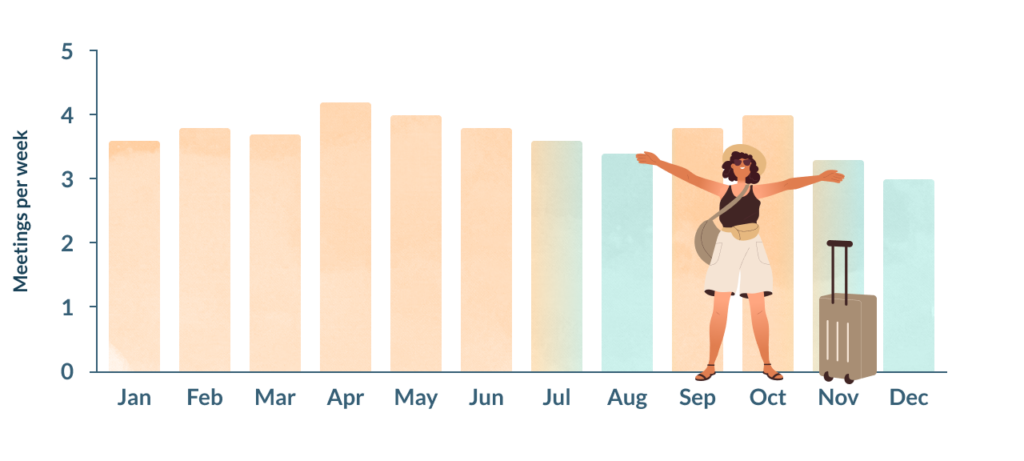
This one challenges some of the conventional wisdom about what times of year are slow or busy at work. For example, summertime overall isn’t much less busy than other times of year — based on meeting volume, it’s just the month of August when most people are taking vacation. But that lull isn’t even the annual low point, which comes in December. April and October, meanwhile, stand out as the most popular months for meetings. Keep these patterns in mind as you work on your annual planning (and when to take your own vacation, too).
R.I.P. to the 9-to‑5: after-hours meetings abound
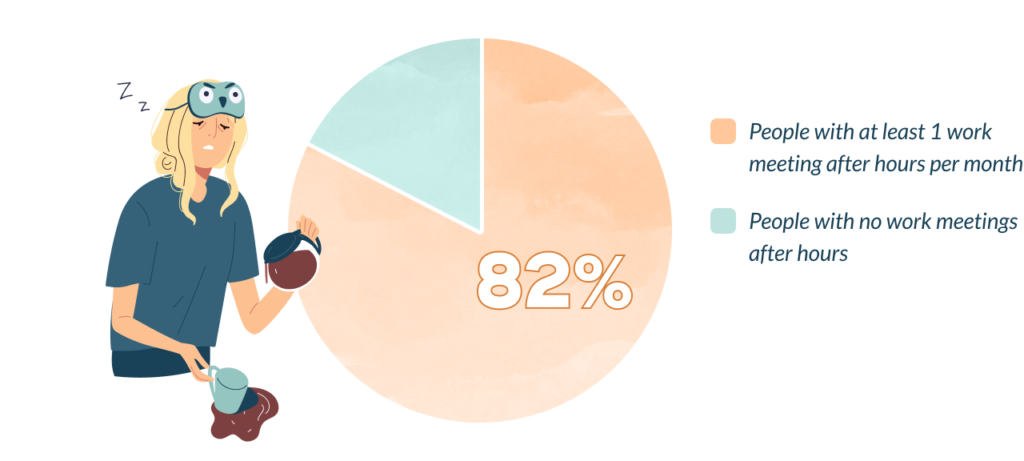
The most striking revelation is the disappearance of standard working hours: the “9-to-5” workday is largely a relic of the past for knowledge workers. Our data reveals that over 80% of people now attend at least one after-hours work meeting every month. This shift points to a more flexible, asynchronous reality where global teams and flexible schedules blur the lines between “work time” and “personal time.” Maybe that’s not a bad thing per se, but it’s something to be aware of when keeping an eye out for signs of burnout in ourselves and others. Everyone needs a break at some point, whether that’s a stricter daily working hours policy or a culture that encourages using vacation time.
(If you are looking for a way to strengthen your team’s working hours policy, Inbox Pause schedules are a great place to start!)
Get your Calendar Insights
Want to analyze your own calendar? Visit your Boomerang Insights for personalized analysis that reveals patterns in how you spend your time, plus your email habits. Get Insights →